
What should a Hylan Boulevard tenant ask about responsibility for sidewalk repairs?
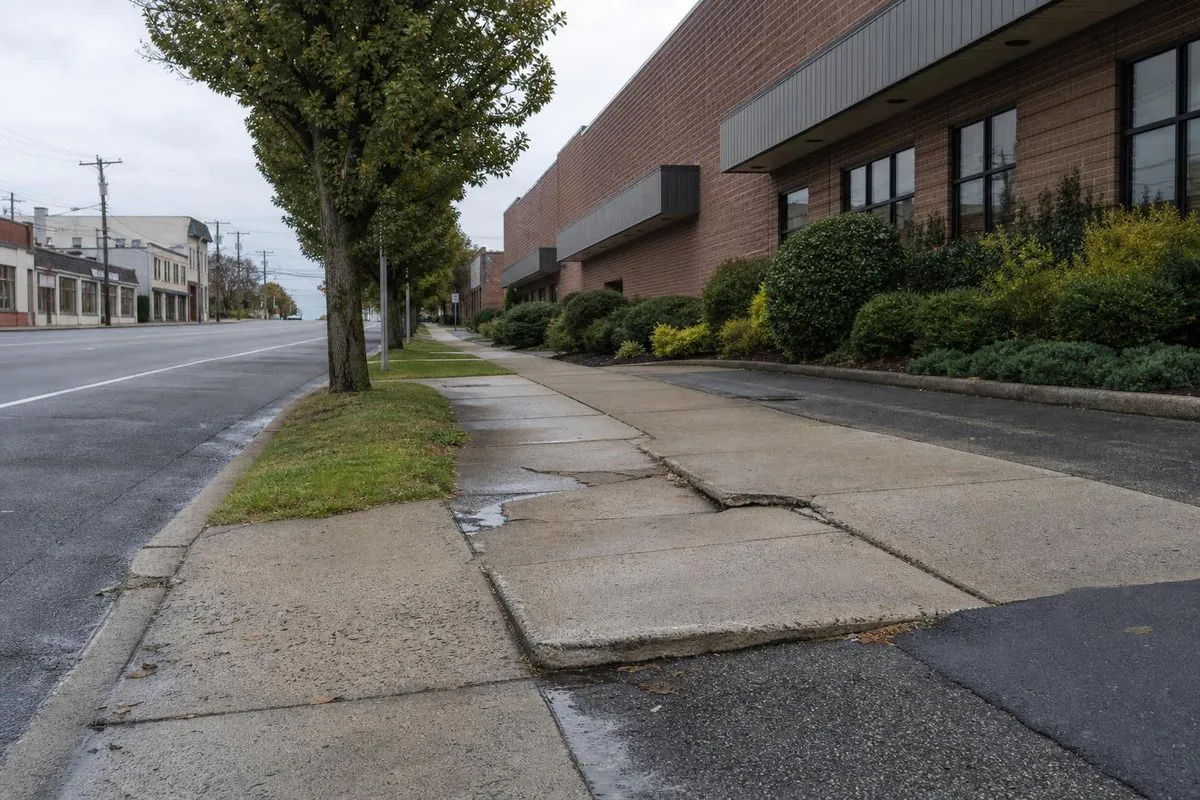
A Hylan Boulevard storefront depends on safe, predictable access. When the sidewalk outside your entrance starts to crack, heave, sink, or puddle, the issue can quickly become bigger than “maintenance.” It can affect customer flow, deliveries, accessibility, and the risk allocation buried in your lease.
For Staten Island commercial tenants, the confusing part is that New York City’s sidewalk enforcement and many injury-liability rules start with the abutting owner, while commercial leases often push day-to-day work and cost onto the tenant. When those two frameworks don’t line up, tenants get hit with surprise invoices, rushed timelines, or disputes about who is allowed to hire contractors and pull permits.
This article provides general information for commercial tenants and landlords in Staten Island, New York. It is not legal advice for any specific lease or property.
Angiuli & Gentile can explain the issues involved in your commercial real estate matter and help you understand the next step.
Why Hylan Boulevard tenants should treat sidewalk repairs as a core lease term
Sidewalk responsibility is not interchangeable “NYC boilerplate” on Hylan Boulevard. This corridor’s design and business patterns create recurring pressure points that make vague repair clauses especially risky.
1) Long frontage and corner exposure. Many Hylan Boulevard sites have extended sidewalk frontage (sometimes wrapping corners). More frontage means more concrete flags that can need replacement, more expansion joints, more transitions at driveways, and more opportunity for misunderstandings about where your responsibility begins and ends.
2) Curb cuts and driveway aprons are common and operationally important. Retail and service uses on Staten Island often rely on driveway access to parking lots, loading zones, or garages. Sidewalk work in those zones can be more than a “patch.” It can involve grade transitions, thicker pours, and stricter compliance steps—and the lease needs to say who controls that process.
3) Tree roots and “free repair” assumptions can be wrong for commercial sites. Tree-root uplift is a frequent cause of uneven pavement. Commercial tenants sometimes assume the City will fix tree-root damage. For many commercial properties, that assumption does not hold, and lease language needs to address whether tree-related reconstruction is treated as tenant maintenance or landlord capital work.
4) Winter operations recur every year and create repeat disputes. Snow and ice removal is not just a legal concept; it’s a staffing and vendor workflow. If a lease is vague about who is “in charge,” winter storms can create repeated friction, repeat vendor bills, and rushed decision-making.
The result: sidewalk clauses should be negotiated the way you’d negotiate rent escalations or operating expenses—because sidewalk obligations can materially change your cost structure.
The City framework tenants should understand before negotiating
Even if a lease shifts sidewalk costs to you, the City’s process still determines how fast you must act and what “done” means.
NYC DOT’s process is notice-driven and documentation-heavy. When DOT issues a sidewalk violation, the process typically involves a notice and an inspection sketch/diagram identifying the specific flags and defects that must be corrected. The deadlines and closeout steps matter because an “open” violation can linger until the City confirms satisfactory repairs.
City timelines can be shorter than lease notice-and-cure language. DOT’s commonly stated repair window is measured in days, not months. Separately, the Administrative Code has provisions that allow DOT to require faster repair when a condition is deemed an “immediate danger.” If your lease makes you responsible for repairs but the landlord controls signatures, approvals, or contractor selection, you can be put in an impossible position.
Permits and closeout aren’t optional. Sidewalk work can be permit-driven, and completion often depends on the City’s dismissal/inspection closeout steps. Your lease should specify who pulls permits, who pays related fees, and who keeps the closeout file.
What a Hylan Boulevard tenant should ask (and insist the lease answer)
Use these questions to spot where risk and control are misaligned.
1) What does “sidewalk” mean in this lease—exactly?
A clause like “Tenant shall maintain the sidewalk” is not enough. Ask the lease to define the covered area (or attach an exhibit): the frontage, side frontage, corner-adjacent areas, and any driveway apron or curb-cut concrete tied to your operations. Also clarify whether the term includes sidewalk structures near the entry (such as cellar doors, vault doors, or grates) and whether snow/ice work is covered in the same clause or separately.
If your landlord won’t define the scope, treat that as a red flag. The more the property functions like a small “site” (parking lot access, multiple curb cuts), the more you need a map-level definition.
2) Are there open sidewalk violations now, and who cures pre-existing conditions?
Before you accept any sidewalk repair clause, ask for the property’s “sidewalk file”:
- Any open DOT sidewalk violation notices and inspection sketches
- Prior proposals, invoices, and photos
- Proof of any prior dismissal inspection requests/results
Then negotiate a clean rule: pre-existing sidewalk violations are landlord responsibility, or there is a defined credit/escrow and a written cooperation requirement if the tenant must manage the work.
3) If a violation arrives during the lease, who controls the repair process?
Your lease should choose one clear model:
- Tenant controls: tenant hires the contractor and runs the process; landlord must cooperate with signatures and access.
- Landlord controls: landlord hires the contractor; tenant reimburses only defined items, ideally with documentation and pricing protections.
- Shared control: landlord manages; tenant reimburses; tenant gets notice and documentation rights.
Avoid the worst-case model: tenant pays but landlord controls everything without time limits.
4) What are the deadlines—and how do we ensure notices get to the right person?
Sidewalk issues escalate because people miss notices. Ask:
- Who receives City mail or posted notices?
- Is the landlord required to forward notices immediately?
- Are email notice provisions acceptable for time-sensitive events?
Then align the lease’s default and cure timelines with City deadlines by adding firm cooperation deadlines (for example, signatures within a stated number of business days).
5) Who pulls permits, and who pays the full “permit-to-closeout” cost?
A practical sidewalk clause should address the entire lifecycle:
- Permit applications and fees
- Contractor licensing and insurance requirements
- Work specifications and scheduling
- Dismissal/inspection closeout steps
- Proof requirements: permit number(s), invoices, photos, and confirmation that closeout was requested
If the landlord wants to control contractor selection, negotiate protections: cost caps, competitive bids, or at least a clear documentation standard.
6) What happens if tree roots drive reconstruction?
If you see root uplift now, treat it as a deal term. Ask whether tree-root reconstruction is:
- Tenant “maintenance,”
- Landlord “capital/structural” work, or
- A shared-cost item with a cap and clear scheduling rights.
Also clarify who handles any Parks/DOT coordination and who bears delays. Tree-driven repairs often take longer and can expand in scope.
7) Do curb cuts or driveway aprons tied to my operations change responsibility?
If your use depends on a driveway entrance or curb cut (customer parking, deliveries, loading), ask the lease to state who maintains and reconstructs the driveway apron area and who controls filings and permits if a curb cut project is implicated.
Even if you are not constructing a new curb cut, existing driveway zones often become the most stressed sidewalk areas. A tenant who benefits from driveway access may be asked to accept more responsibility—but only if the lease gives the tenant the authority to manage the work.
8) Who is responsible for snow and ice removal, and how is it documented?
Snow and ice clauses should be operational, not abstract. Clarify:
- Who hires and pays a snow vendor
- Who has access to the full frontage (including corners)
- Where materials can be stored
- What documentation will be kept (invoices, logs, photos)
Don’t accept a clause that makes you responsible for snow removal on paper if you lack practical access or control.
9) How do insurance and indemnity provisions allocate sidewalk risk?
Sidewalk obligations are often “implemented” through insurance and indemnity more than through repair language. Tenants should separate:
- Statutory owner-side insurance expectations,
- Lease-required tenant coverage (CGL limits, additional insured status), and
- Indemnity breadth (is it tied to tenant control/causation, or broad enough to shift owner negligence?).
Indemnity and insurance procurement provisions should match the real-world allocation of control over contractors and permits.
10) What records are required to prove compliance and close out the issue?
If you’re doing the work, your lease should specify what ends the dispute:
- Permit number(s)
- Contractor invoice(s) and proof of licensing/insurance
- Before/after photos
- Confirmation a dismissal/inspection closeout step was requested
Good recordkeeping matters at renewal, assignment, and sale of your business. A vague clause often means old sidewalk issues reappear years later.
How Angiuli & Gentile can help review sidewalk obligations
If your Hylan Boulevard lease makes you responsible for sidewalk repairs, you need to know what that obligation actually includes before a notice, dispute, or unexpected bill arrives. Angiuli & Gentile, LLP helps Staten Island commercial landlords and tenants draft, negotiate, and enforce lease terms, including provisions that allocate repair costs and liability.
We can review the repair, common-area, insurance, and compliance clauses together, rather than treating one sentence as the entire agreement. That review can identify who arranges the work, who pays, what approvals are needed, and what happens if the responsible party does not act. Bring the complete lease, amendments, photographs, and any City notice so we can address the actual documents.
A workable agreement should address both responsibility and performance: access, deadlines, permits where required, proof that the work was completed, and insurance obligations. We can explain your options for clarifying or enforcing those terms and help you make an informed decision about the property.
Related resources
- Commercial Real Estate
- Business Law (Commercial Lease Review and Negotiation)
- Real Estate Law
- Contact (1493 Hylan Boulevard, Staten Island)
Questions About Commercial Real Estate?
Angiuli & Gentile can explain the issues involved in your commercial real estate matter and help you understand the next step.
Professional Profiles
WHAT OUR CLIENTS SAY
General feedback about working with Angiuli & Gentile, LLP:
“Anytime we needed them they were there for us.”
— Belinda P
“Your team was informative and professional throughout the process;”
— Patrick
FAQs: Sidewalk repair responsibility for Hylan Boulevard tenants (Staten Island, NY)
These FAQs provide general issue-spotting information for Staten Island commercial leases and NYC sidewalk compliance. Lease language and site conditions control.
Does NYC law automatically make a Staten Island commercial tenant responsible for sidewalk defects in front of the premises?
NYC’s starting point is owner-focused: Local Law 49 of 2003 added NYC Administrative Code § 7-210, shifting sidewalk-maintenance responsibility and much sidewalk injury liability toward the abutting owner for covered properties. A commercial tenant is not automatically responsible under § 7-210 simply because it uses the sidewalk every day.
That said, a tenant can still face exposure depending on facts and contract language—particularly if the tenant created a condition, made alterations affecting the sidewalk area, or is tied to a “special use” theory supported by evidence. Tenants should treat lease sidewalk language as a serious risk-allocation clause, not a throwaway maintenance sentence.
Sources: Legislation Details (With Text) – Int 0193-2002; Xiang Fu He v Troon Mgt., Inc. (2019 NY Slip Op 07643); Fuentes v Parkchester S. Condominium, Inc. – 2026 NY Slip Op 03920.
If the lease shifts sidewalk repairs to the tenant, can the tenant still be in default even though DOT addresses violations to the owner?
Yes. NYC DOT’s violation process is generally owner-facing, but a commercial lease can still make the tenant responsible to perform repairs, reimburse costs, or both. If the lease requires sidewalk compliance and the tenant misses contractual deadlines, the landlord may assert default—even if the landlord is the person receiving DOT notices.
Tenants should negotiate to avoid being “responsible but powerless.” If you are expected to manage repairs, your lease should give you authority to engage contractors and pursue permits (or require the landlord to provide signatures quickly). NYC DOT and NYC311 guidance also makes clear that repairs often require permits and closeout steps, so lease compliance should include documentation requirements.
Sources: NYC DOT – Sidewalks; Sidewalk Violation and Repair · NYC311; Staten Island Commercial Real Estate Attorneys.
What should a Hylan Boulevard tenant request from the landlord about existing DOT sidewalk violations before signing or renewing?
Ask for the full sidewalk-violation file, not just an assurance. That includes the Notice of Sidewalk Violation, the inspection sketch/diagram identifying which flags must be corrected, and any prior proposals, invoices, or photos. NYC DOT explains that violations are issued to encourage repairs, and a copy can remain on file until the City receives official notification that satisfactory repairs have been made.
Then negotiate deal terms around pre-existing conditions. Tenants commonly seek a lease representation that there are no open sidewalk violations at delivery (or a written plan allocating responsibility, timeline, and proof). NYC311 explains that after owner-performed repairs using a licensed contractor and valid permit, the owner must request a dismissal inspection and the violation is removed once DOT confirms the work.
Sources: Questions & Answers to Common Sidewalk Violations; NYC Sidewalks: A Property Owner’s Guide to Address Sidewalk Defects; Sidewalk Violation and Repair · NYC311.
How should a tenant compare DOT’s repair timeline to the lease’s notice-and-cure provisions?
NYC DOT guidance commonly states the owner has 75 days to make repairs after a Notice of Sidewalk Violation is received and explains how the 75 days are counted (certified mail receipt or, if not delivered by mail, the posting date). NYC311 similarly warns that if defects are not repaired within 75 days, DOT may perform the work and bill for it.
Tenants should also account for faster timelines in “immediate danger” situations. NYC Council legislative text reflecting § 19-152(d) describes DOT’s authority, after written notice and an immediate-danger determination, to direct repair within 10 days of service of the notice. Your lease should ensure notice delivery, approvals, and signatures can happen inside these City windows.
Sources: Questions & Answers to Common Sidewalk Violations; Sidewalk Violation and Repair · NYC311; Legislation Details (With Text) – Int 0195-2026.
Do sidewalk repairs require a DOT permit, and who should the lease say is responsible for pulling it?
Often yes, especially when work is in response to a DOT violation. NYC311 explains that if DOT issues a violation stating the sidewalk needs repair, the owner must hire a licensed contractor and the contractor must obtain a DOT sidewalk opening permit before beginning work. NYC311 also provides a stated permit cost structure and notes that corner properties may require two permits if work is on both sides.
From a tenant perspective, the lease should match responsibility to authority. If you are required to perform or manage sidewalk work, the lease should authorize you and your contractor to pursue required permits and require the landlord’s cooperation for signatures and documents. DOT’s dismissal checklist also makes clear that closeout depends on having accurate permit and violation information ready.
Sources: Sidewalk Construction Permit · NYC311; NYC DOT – Street Works Permits; How to Dismiss your Sidewalk Violation.
If the sidewalk damage is caused by tree roots, can commercial tenants rely on a City “free repair” program?
Commercial tenants should generally assume no. NYC311 explains the Trees and Sidewalks Repair Program provides free repairs only for qualifying sidewalks damaged by curbside tree roots in front of one-, two-, and three-family homes, and it expressly states the program is not available to owners of commercial properties.
If you see root uplift outside a Hylan Boulevard storefront, treat it as a negotiated allocation issue: is it landlord capital work, tenant maintenance, or shared? NYC311 also describes that independent repairs can require permits such as a Tree Work Permit and a DOT Sidewalk Construction Permit. Because tree-related repairs can add time and constraints, your lease should address who coordinates, who pays, and who bears delays.
Sources: Trees and Sidewalks Repair · NYC311; NYC DOT – Sidewalks; NYC Sidewalks: A Property Owner’s Guide to Address Sidewalk Defects.
How do curb cuts and driveway aprons affect sidewalk repair responsibility for a Staten Island commercial tenant?
Curb cuts are regulated and can expand the scope and cost of sidewalk work. NYC DOB explains that before beginning a curb cut project, DOB must approve proposed plans and issue a work permit, and it also notes DOT sidewalk and curb permits and DOT specifications apply. If your business depends on driveway access, the lease should say who controls filings and who pays professional and permit costs.
Driveway zones also intersect with “special use” concepts in New York case law. In Prete v JJ Hoyt LLC, the court analyzed special-use driveway issues and emphasized the role of causation in whether a defect is tied to the special use. Tenants should negotiate clear allocation for driveway-apron concrete used by the business.
Sources: Curb Cuts – Buildings; Instructions for Filing Plans & Guidelines for the Design of Sidewalks, Curbs, Roadways and Other Infrastructure Components; Prete v JJ Hoyt LLC (2026 NY Slip Op 00458).
Who is responsible for snow and ice removal near a Staten Island commercial storefront, and what should the lease clarify?
NYC’s snow and ice rules can apply beyond the owner. In Xiang Fu He v Troon Mgt., Inc., the Court of Appeals discussed § 16-123(a) as imposing a duty (with fines) to remove snow/ice on every owner, lessee, tenant, occupant, or other person having charge of an abutting sidewalk within specified timeframes. Local Law 49’s sidewalk law framework also treats negligent snow and ice removal as part of failure to maintain a sidewalk in a reasonably safe condition.
For tenants, the lease should make the operational plan explicit: who hires the snow vendor, who has access to the entire frontage (including corners), where supplies can be stored, and what documentation will be kept (invoices, logs, and photos). Ambiguity here creates repeat disputes every winter.
Sources: Xiang Fu He v Troon Mgt., Inc. (2019 NY Slip Op 07643); Legislation Text – Int 0913-2015; Legislation Details (With Text) – Int 0193-2002.
What insurance and indemnity questions should a Hylan Boulevard tenant ask about sidewalk risk?
Start by separating statutory expectations from lease requirements. New York courts have noted that Local Law 54 (2003), codified as § 7-211, requires owners liable under § 7-210 (other than specified public entities) to maintain liability insurance for sidewalk-related injury and property damage. Leases often add tenant CGL requirements, additional insured endorsements, and broad indemnity.
Indemnity language must be read carefully under New York law. General Obligations Law § 5-321 makes certain lease provisions exempting lessors from liability for their own negligence void. At the same time, Court of Appeals decisions (including Great N. Ins. Co. v Interior Constr. Corp.) discuss enforceability of insurance-backed risk allocation clauses in specific commercial contexts. Tenants should align indemnity breadth with actual control over repairs and contractors.
Sources: Gangemi v City of New York (2006 NY Slip Op 26392); SECTION 5-321 Agreements exempting lessors from liability for negligence void and unenforceable; Great N. Ins. Co. v Interior Constr. Corp. (2006 NY Slip Op 07519).
What evidence should a tenant preserve if someone trips near the storefront, and what deadlines might matter?
Even when the owner is the primary statutory target, tenants should preserve evidence quickly because disputes can arise over creation, alteration, or special use. Preserve time-stamped photos/video, measurements if safely obtainable, lighting and weather conditions, and any snow/ice treatment logs. Keep permits, invoices, and contractor insurance documents if repairs were recent or underway.
Deadlines depend on who may be involved. CPLR § 214 states that an action to recover damages for personal injury must generally be commenced within three years (subject to exceptions). If a claim might involve a municipality or other public entity, General Municipal Law § 50-e can require a notice of claim within 90 days, and § 50-i generally requires commencement within one year and ninety days. Falls can also cause serious injuries, particularly in older adults.
Sources: CPLR § 214 Actions to be commenced within three years; GML § 50-e Notice of claim; GML § 50-i Presentation of tort claims; commencement of actions; Facts About Older Adult Falls.
Ready to Discuss Your Commercial Real Estate Matter?
Angiuli & Gentile can explain the issues involved in your commercial real estate matter and help you understand the next step.




Related Angiuli & Gentile Videos and Social Posts